REFORMATION HOPE IN CHRIST

Martin Luther, the great evangelical catholic theologian and Sixteenth Century reformer of the Church, lived in a time of colossal challenges and hardships. In addition to the many troubles Martin Luther experienced due to his efforts to increase Biblical literacy, promote Christian revival, and reform the entrenched corruption of the Church of Rome and the Holy Roman Empire, Martin and Katie his wife also lost two of their six children (probably due to the plague) during their life together: first their infant daughter (Elizabeth Luther) died at only 7 months old, and then years later their teenage daughter (Magdalena Luther) died at 13 years old. Moreover, Europe was under constant attack by the Turkish Ottoman Empire, and there was populist unrest and revolt all over the place.

Martin Luther lived in extremely uncertain times, and it’s very unlikely in the year 1523 that Luther could have foreseen with any amount of certainty how all of his work would ultimately turn out. In that early Sixteenth Century timeframe (a pivotal time of immense transition from the Late Medieval era to the Renaissance era), Martin Luther’s evangelical catholic reformation of the Church was not a steady and glorious march of gospel revival and spiritual restoration. Indeed, it was never smooth going. Rather, it was messy, and it had its share of radicalism and extremism. However, one thing was for sure, it was quite clear that something a lot bigger than one person, a lot bigger than even the great Martin Luther, was taking place.

Furthermore, all of this socio-political and religious turmoil wasn’t happening in a technological vacuum. For it was a time of new technologies such as the printing press. It was a time in which an innovator who was a mathematician, astronomer and Church canon lawyer, named Nicolaus Copernicus, published his great scientific work that kicked Planet Earth out of the center of the Solar System. It was also a time in which the map of the globe was growing increasingly extensive and detailed, being charted by the expanding empires of Portugal and Spain.

What new kind of world was emerging out of all this? Which aspects of all this great change were good and righteous and constructive? Which aspects of all this change were destructive, unrighteous and demonic? How was God’s Holy Spirit calling, gathering and enlightening his Church for such times as this?

Today, 500 years on from Martin Luther in 1523, in this Year of our Lord 2023, we the modern-day Church of Jesus Christ find ourselves living through a similarly pivotal time of colossal challenges. We are still trying to help our youth climb out of the developmental stagnation they endured resulting from the unprecedented “stay at home” directives, requiring them to do school and learn, to build relationships and develop life skills, all from their bedroom desks on laptops and tablets. And sadly, we are still contending with old radical ideologies that have been repackaged for our digital era, causing great harm in their wake.

Additionally, the tried and true principles of life and liberty, of family and faith, and so on, are all under tremendous pressure. New technologies and discoveries are wiring us up and plugging us in (whether we like it or not) for both good and ill. Our technology can be used to keep us informed and connected, but this technology is also used to keep us propagandized and contained.

So yes, something new is emerging, and the world is changing at a lightning pace. But the question always remains: Which changes are good and Godly, healthy and constructive, and which changes are not?

I believe God is still calling and shaping us, his Holy Church, to be faithful witnesses within the world that is presently emerging, no matter what the cost to us might be. We just need to be enlightened and shaped by God’s grace and truth, first and foremost, and to be ready and willing to answer God’s call.

Forever secure in God who is “our refuge and strength” (Psalm 46:1) we can be bold in our witness of the good news of Jesus Christ our Lord and Savior. For as Jesus declares to his disciples of all times and places, “I am with you always, even to the end of the age” (Matthew 28:20).

Together in Christ, Pastor Tim

THE FEAR & GRACE OF THE LORD

It is an absolute understatement to say that we are living through a time of information overload and rampant fear-mongering. Due to the digital media revolution of the past several decades, we are now enduring a time in which every molehill is a 10-mile-high mountain and every single challenge is an existential crisis for humanity. From the moment we get up in the morning to the moment we go to bed, we essentially hear daily cries of “the sky is falling” or “wolf! wolf!” flooding into our minds and hearts, seeking to stir people up into a fear-soaked frenzy for the purpose of serving this or that agenda.

However, if everything is a mountain then nothing is; if everything is a crisis then nothing is. Consequently, we are so overwhelmed and burned out by the constant parade of media-ratings-driven crises that we struggle to pay attention anymore. So of course, we would be well-advised to remember the moral of the old folktales of The Boy Who Cried Wolf and Chicken Little.  In particular, if we remember the ending of the Chicken Little story then we could recall that Chicken Little got other small animal friends whipped up into his hysteria while they completely missed the real threat of the fox in their midst (who eats them all in the end).

As believers and followers of Jesus Christ, the Anointed One who is the Living Revelation of Almighty God’s mercy and forgiveness, we are partakers of his reconciling heart and compassionate mind for the sake of the world. Therefore, the divisiveness and manipulation that saturates our culture these days, seeking to divide and control at every level of society, is contrary to the grace and truth of Christ our Savior. “For God has not given us a spirit of fear, but of power and of love and of a sound mind.” – (Second Timothy 1:7)

Of course, there is a good kind of biblical fear, a kind of fear that empowers our love and soundness of mind: it’s “the fear of the Lord” as the Holy Scriptures declare. That is, it’s the “fear” of awe-struck wonder at the deep mystery of God. It’s the “fearful” awe and reverence for the Eternal God that leads to insight, understanding and wisdom. As it says in the Book of Proverbs, “The fear of the Lord is the beginning of wisdom, and the knowledge of the Holy One is insight” (Proverbs 9:10).

This biblical “fear of the Lord” is what leads us to be free peacemakers and free bridge-builders in our lives and world. Freeing us from all forms of human tribalism, the fear and love and faith of Christ our Lord can lead us to transcend earthly divisions for the glory of God and the benefit of all. So as we await the fullness of God’s Kingdom to come when our resurrected Lord Jesus returns to us in person someday, we can be those peacemaking “children of God” that Jesus talks about in chapter 5 of the Gospel of Matthew.

Moreover, as citizens of the United States of America, we are especially blessed to live in the most universally diverse of all the countries on Earth. It’s not perfect (no country has a perfect history), but we are nonetheless the most diverse country in the world, and I believe God has blessed us Americans with the task of modeling and defending the idea of e pluribus unum (unity from diversity). But more importantly, as Christians, in the name of Jesus Christ, we can be respectful and merciful in this disrespectful and wrathful time, and we can always seek to understand those who differ with us even though we might firmly disagree.

Together in Christ, Pastor Tim

THE POWER OF THE CROSS OF CHRIST

As winter approaches, there’s deep concern about a looming energy crisis in Europe, caused in no small part by the war in Ukraine. And our country is also experiencing its own problems regarding energy. Debates rage about how to transition to non-fossil fuel sources as energy prices go up and our power grids in some places are strained almost to the brink of collapse. And very moderate estimates say that we would need to double the size of our power grid just to begin to meet the energy requirements for a future in which the electric vehicle (or EV) is the dominant form of automotive transportation.

As brownouts roll across high population centers, people are increasingly asking: Where are we going to get the power? Is it going to come from low-carbon natural gas? From solar, wind, geothermal, or nuclear? Or is it simply a robust combination of all of these sources?

This question, in a spiritual sense, is also a question that Christianity is asking these days within our American society. Of course, I’m not talking about how we’re going to power the lights and air conditioning. What I’m saying is, spiritually speaking, where are we going to get the energy for these times of colossal societal shifts that are so much bigger than us? Where are we going to get the power?

Brothers and sisters in Christ, we face a different kind of energy crisis as Christians within our secularizing American culture. Our declining denominations of every branch of the Church, dwindling Christian institutions, and struggling congregations, are causing us to wonder (and even worry) where we’re going to get the power to move into the future. Yes, COVID took its toll on the Church, no doubt about it. However, this spiritual energy crisis for the Church in the United States was already in place, and growing, long before any of us ever heard about the coronavirus. The pandemic was merely a kind of accelerant which exacerbated trends within American Christianity that were already well established.

Seminary enrollments have seen a marked drop in recent decades. Worship attendance has been trending downward for years in every single county of the United States. The fastest growing religious affiliation in our country is “none” — no affiliation whatsoever. Volunteerism is way down across the board in our American society, which has a huge impact on service clubs, fraternal organizations, youth organizations, and, of course, on congregational life. And Church bodies and institutions have been made to reorganize, then reorganize again, and then reorganize yet again, in response to dwindling resources. So, essentially, we have an energy crisis in the Church throughout our nation, even within the mega-church congregations now.

Nonetheless, at the risk of sounding overly simplistic, I would like to suggest that we have a power source which can fuel the future of the Christian Church in America (whatever form that future might take), and this power source is right under our noses. It’s a renewable resource of inexhaustible supply, and this power is the gospel of Jesus Christ. It is the message we have been given to proclaim to the world that [1] there really is such a thing as sin, [2] our sin separates us from God and one another, and [3] we sinners are reconciled to God through the death and resurrection of Jesus Christ. It’s the message that we are forgiven and freed by the sacrificial blood of the cross of Christ our Lord, so that we might live a new life with God which begins now and continues forever.

In fact, the New Testament refers to the gospel as “the power of God” for our salvation in the Book of Romans. And the actual Greek word translated into English as the word “power” is the word dynamis. So if this word sounds to you like the word “dynamite” then you are correct. That is, according to the New Testament, the full gospel concerning the reality of sin, the spiritual consequences of sin, and then the forgiveness of sin granted to us by the infinite atonement of the sacrificial offering of Christ on our behalf, is an explosively saving and redeeming message. It’s a message that detonates within the receptive ear and open heart, igniting the living fire of faith and salvation. The gospel is the very power that drives faith and fuels the Church.

I believe a major factor in the energy crisis of the Church in America is that we’ve lost our focus on the power of the gospel. Far too many think it’s insufficient as an energy source — that it must be combined with something else, such as the latest fashions in entertainment and media. Or, too many people these days seek to dilute the significance of the cross of Christ, making Jesus into merely a grand religious example, a great spiritual ethicist, or the ideal leader of a liberation army. Therefore, as long as the cross is treated as an afterthought — or worse, as an embarrassment — you can expect the energy crisis in the American Church to continue.

But I’m optimistic. As other power sources we run after prove to be insufficient, the Church will continue to grow dim for a time, BUT within the growing darkness of our culture we will more and more come to see the True Light who was hanged on a central cross between two criminals. For as we see in Luke chapter 23, amid sarcasm and scoffing from those who mockingly call Jesus messiah and king, our Lord Jesus Christ reveals that he, as the Universal Messiah and Everlasting King, gives his life in love for the sake of the world. Enthroned on his sacrificial cross, Jesus uses his divine authority to welcome a penitent sinner into God’s heavenly paradise. And Jesus does the same thing for us! Thanks be to God!

In other words, if we were to die tonight, and we were to enter God’s paradise, what would we say about our entry into glory? Would we say, It’s because I…? It’s because I made a covenant with God, or it’s because I am faithful, or it’s because I am this or that… No! Rather, it is because HE (Jesus). It’s because HE died for me. It’s because HE made a baptismal covenant with me. It’s because HE is faithful and true. Like the thief on a cross next to Jesus, it is entirely because HE granted us access to God’s paradise. The thief in paradise can only and ever say, It’s because the man on the middle cross said I could come. Likewise, when we’ve been there ten thousand years, bright shining as the sun, it can only and ever be said by us that it’s entirely because the man who was hanged on the middle cross said that you and I could come to be there.

The gospel of the cross of Christ is the saving dynamite that, when harnessed through his Word and Sacraments, fuels the Church. So as we try in vain to plug into other energy sources, we will come to see once again that the good news of the forgiveness of sin and the promise of eternal life through Jesus Christ provides us with all the power we will ever need.

Good Advent & Merry Christmas!!! Pastor Tim

RISE UP, O SAINTS OF GOD!

November 1st each year is All Saints’ Day, and the word “saint” in the New Testament of the Bible refers to all those who have been forgiven, justified and sanctified by the grace of God through faith in Jesus Christ. In other words, saints are those who are reconciled to God by the infinite atonement granted to all who believe and trust in the life, death, resurrection and ascension of the Universal Messiah, Christ our King. And this biblical definition of what it means to be a “saint” (i.e. a baptized, saved and redeemed disciple of Christ) is a very important and essential concept to guide us as we journey through this confused and conflicted world in which we live.

While we recognize that we all possess various earthly identities, we also recognize that much of our society today has embraced a kind of extreme identitarianism. But as people of God, we know that our lesser earthly identities fall far below our primary identities according to the Word of God. That is, we are faithful to God’s Word to believe and understand that we have a divine identity hierarchy, with the following three identities at the very top of our identity hierarchy: as Christians, each of us are [1] a child of God Almighty, [2] a child of God’s baptismal covenant, and [3] a disciple of Jesus Christ. Therefore, all other identities on our identity hierarchy are lesser than these top three identities (our primary identity trinity, so to speak).

The problem is that our modern secularizing society wants to reverse this sacred identity hierarchy by flipping it over in order to elevate our lesser identities above our highest identities. So this extreme identitarianism of our time seeks to completely overturn and usurp our God-given identity hierarchy, as well as flip over our God-given values and virtues. For example, the Critical Race Theory (CRT) that’s based in Marxian critical theory has become an issue these days in education programs, business HR departments, religious institutions, and so on. And this CRT, as it has been manifesting itself within our present society, is merely another form of the extreme identitarianism of our modern timeframe.

However, instead of Critical Race Theory and other such things, I want to propose that we as saints of God embrace a Kingdom Race Theology (KRT). As an alternative framework to the identitarianism of CRT, Kingdom Race Theology says that God’s rule is over every single sphere of life, including racial and ethnic issues. And KRT also means that we can fully teach an honest history of our nation and world that includes both the bad and the good, that addresses both painful and commendable aspects of the past, but the gospel of the Kingdom of God always keeps our divine identity hierarchy intact and in the correct order of significance.

The Holy Bible declares in the Book of Acts, chapter 17, “Of one blood God made humankind to dwell upon all the face of the Earth” (Acts 17:26). So when Christians lead the way with this biblical KRT (Kingdom Race Theology), then it opens the door to true racial and ethnic reconciliation, and to true God-given unity under our divine identity hierarchy. Consequently, we must resist false sociological fashions in society, and stand firmly and unashamedly upon the foundation of the tried and true biblical principles that have guided God’s people since time immemorial.

Let us not be ashamed of the principles of the gospel; let us rely on them, and let us use and apply them to these big issues within society. Basically, let us have a Kingdom agenda above all other agendas. Thereby, with KRT and other gospel insights like this, we can help the world do what it simply cannot do in and of its own limited frame of reference. For as the wonderful and powerful Christian hymn Rise Up, O Saints of God states in verse two: “Speak out, O saints of God! Despair engulfs Earth’s frame; as heirs of God’s baptismal grace, the Word of hope proclaim.”

This November 2022, may all of you have a blessed All Saints’ Sunday on the 6th, a rejoiceful Christ the King Sunday on the 20th (when we’ll worship with our Korean Presbyterian brothers and sisters), as well as a very happy Thanksgiving Day on the 24th…

Grace & Peace, Pastor Tim

NOW THAT IT’S IN THE REARVIEW MIRROR

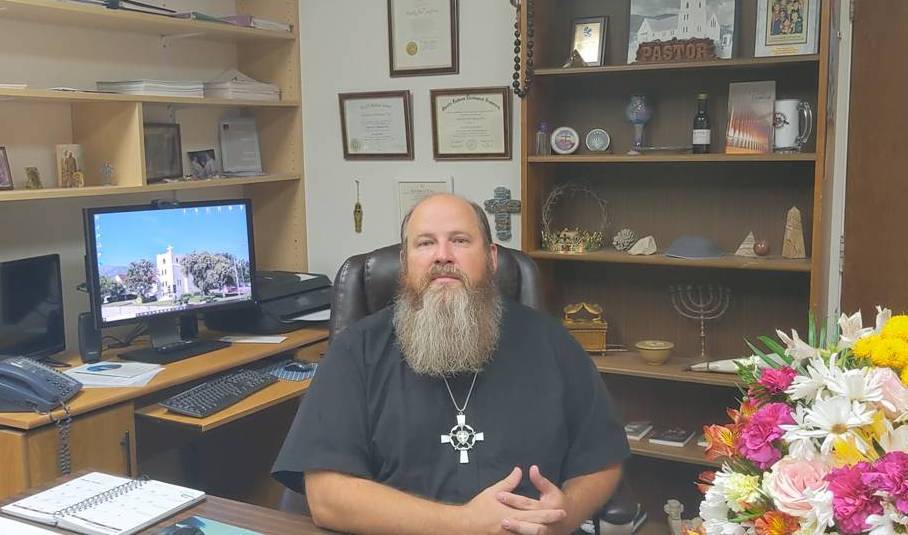
I’m sharing a picture of me with my quarantine lockdown beard that I grew back in 2020. This was taken at the height of the lockdown when I was doing video announcements, devotions and messages from my office. And growing this wizard beard was fun for me to do during an otherwise very difficult time for our nation and world.

Since the time of this photograph two years ago, the pandemic has moved into our rearview mirror. As in the rearview mirror of an automobile, we can still see the effects of the virus but the pandemic is now behind us. It’s essentially over since it has moved into an “endemic” reality. We have moved from the pandemic into an endemic phase, which means this virus is always going to be with us as a part of the overall ecosystem of annual illnesses. Consequently, there will always be new variants just as there are with influenza each year.

We have also learned that the expectation of never getting this virus is simply an unrealistic one. The truth is that, if we haven’t had it already, we are all going to get it at some point. But thankfully, due to the artificially activated immunity from the vaccines and boosters, and due to the naturally occurring immunity that comes from getting this illness, we now have widespread “herd immunity” moving forward. In addition to all of this, the various excellent therapeutics that have been developed also give us further confidence that we are free to embrace life and ministry to the fullest once again.

As a congregation of the Church of Jesus Christ, we certainly should never again take for granted the opportunity for connection with God and each other that is provided to us through regular participation in Bible study, choir, ministry committees, worship, and Holy Communion with the Lord at his Holy Table each week. Therefore, “not neglecting to meet together as is the habit of some” (Hebrews 10:25), let us recommit ourselves to the blessed habit and weekly rhythm of congregational life — especially to in-person Sunday morning worship, face to face. Let us resist turning Christianity into something to be consumed electronically, understanding that Christian fellowship, discipleship and spiritual growth happen best in the week-to-week interaction of in-person community, which is beautiful (but sometimes difficult) and always truly necessary for us.

So now, let’s sing loudly together from our pew seats at church. Let’s boldly praise the Lord without inhibition. Let’s resoundingly speak our liturgies and sing our hymns by the power of the Holy Spirit. Let’s walk away from the Lord’s Table each week with a lingering foretaste of the Kingdom of God in our mouths and hearts and souls. And let’s reach out to our unchurched neighbors with the good news and lovingkindness of Jesus Christ, inviting them to the variety of outreach activities and events we are now offering, which include the following:

+ MOLC Summer Day Camp

+ MOLC Trunk or Treat

+ MOLC Holiday Artisan Festival

+ MOLC Community Luncheon

+ And more to come…

Dear brothers and sisters in Christ, let us be changed by what we’ve experienced over the past several years to live more fully, to love more joyfully, to worship more faithfully, and to share the gospel more urgently. And may we always remember that God is with us to guide us, empower us, and embolden us forward in mission and ministry. God is here in our midst, giving us new life and hope and courage.

A very happy and blessed Fall be with all of you!

Together in Christ Our Lord, Pastor Tim

AN ECUMENICAL PEOPLE OF GOD

While staying with our son, daughter-in-law and grandkids this past August, we were able to see many of our national shrines and memorials in Washington DC and the surrounding area. We were blessed to be able to visit the giant obelisk monument to the Father of our Country, George Washington, at the National Mall area. We also visited Mount Vernon, George Washington’s beloved home in Alexandria VA, of which he famously said, “I’d rather be at Mount Vernon with a friend or two about me, than to be attended at the Seat of Government by the Officers of State and the Representatives of every Power in Europe.” We were also able to see the Jefferson Memorial, the Lincoln Memorial, the Capitol Building, the Supreme Court, the Smithsonian Museum of American History (which displays the actual Star-Spangled Banner of our national anthem), and the Smithsonian Museum of Air & Space. In addition, we visited the US Naval Academy and harbor area of Annapolis MD, and we saw Fort McHenry (of Star-Spangled banner fame) in Baltimore.

As we traveled around these amazing historical sites, one thing I took note of was the fact that our national founding (although imperfect) was deeply rooted in biblical faith. However, our Founders made sure that our establishment was nonsectarian. While they repeatedly appealed to God in our founding documents (speaking of our “Creator” and our “Lord”), and while they regularly addressed God in our founding traditions (Congressional prayer, oaths of office, and so on), they also made sure that there would be no establishment of a state-run religious denomination. Therefore, I observed during our trip a clear Judeo-Christian rootedness on display at all of our national shrines and memorials, but this was accompanied by a clear interdenominational, nonsectarian and ecumenical emphasis according to the clear direction of our Founders.

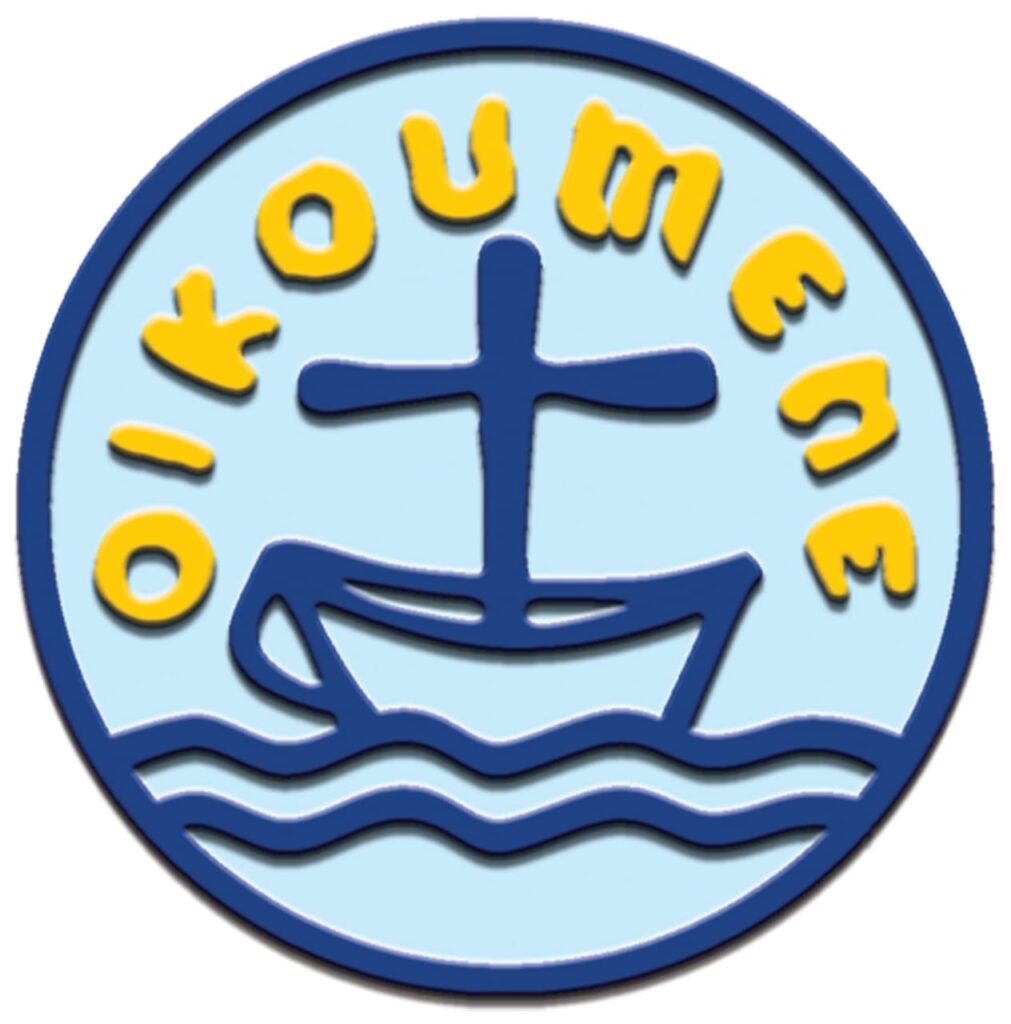
By the way, the word “ecumenical” (oikoumene in Greek) literally means “the whole inhabitable earth” — but it refers to the concept that the entire Christian Church of all its various denominations should work together to develop closer relationships and to promote Christian unity according to the biblical High Priestly Prayer of Jesus in John, chapter 17, verses 20-26.

So all of this stuff got me thinking about our ecumenical relations right here where we live as Mt. Olive Lutheran Church. I think of Via De Cristo (VDC), the spiritual retreat ministry our congregation participates in. While it’s mostly a retreat ministry involving Lutherans, rooted in the covenantal and sacramental theology of the Lutheran branch of Christianity, VDC also draws in people from many different denominations of our Lord’s Holy Church. I also think about the Lift Up Crescenta Valley ecumenical association we are a part of, as well as all the various ecumenical partnerships we support like the Bailey Human Care Center.

Like the ark of the Prophet Noah and the fishing boat of the Apostle Peter, all the denominations of the Christian Faith constitute the holy life raft for all believers and followers of Jesus Christ in a world deluged with the floodwaters of hopelessness and spiritual death. In fact, the Christian ecumenical movement is often symbolized by a boat, representing that all the people of all the denominations of the Church of Jesus Christ are in the same spiritual boat together.

So essentially, the various branches of the Christian Church are UNITED IN THE ESSENTIALS of our Christian Faith: 1) Jesus of Nazareth was and is more than a man, even much more than a prophet or priest or king, 2) Jesus is the only-begotten divine Son of God, 3) Jesus freely gave of himself in sacrificial love to be the once-and-for-all-time offering of atonement for our sins, 4) Jesus was crucified, was dead, was buried, then he rose from the grave and ascended into heaven, 5) Jesus is our Lord and Savior, 6) We proclaim the forgiveness of sins and everlasting life by the blood of Jesus, and 7) We do good works of lovingkindness and service in the name of Jesus. However, we also have DIVERSITY IN THE NON-ESSENTIALS of our Christian Life: that is, diversity of denominational practices related to sacraments, ordination, worship, piety, organizational structures, etc.

Therefore, as the various branches of the Christian Church have diversity in the non-essentials but unity in the essentials, we should also have CHARITY IN ALL THINGS. We can have a joyful and charitable spirit with one another as we agree to disagree regarding the non-essentials, because we share together in the all-surpassing seven Christian essentials I listed above.

“I have given them the glory that you gave me, that they may be one as we are one — I in them and you in me — so that they may be brought to complete unity. Then the world will know that you sent me and have loved them even as you have loved me.” (John 17:22-23)

Together in Christ,  Pastor Tim

WAR & PEACE

With the “wars and rumors of wars” (Matthew 24:6) of our 21st Century world, many Christians are wondering what God’s Word within the Bible says to us about such things. In particular, with Russia’s war against Ukraine in Eastern Europe and with “rumors of wars” brewing between China and Taiwan in the Western Pacific, I’ve been hearing questions about what the Bible has to say (especially the New Testament) regarding all of this. So, I thought I’d use my church article this month to do some biblical and theological reflections concerning war and peace from a Lutheran perspective.

Lutheran Christians have traditionally followed the Two Kingdoms Doctrine in our understanding of the relationship of Church and State. Rooted in the Holy Scriptures, this doctrine affirms that God established two primary realms of societal order: 1) the kingdom of God’s right hand, and 2) the kingdom of God’s left hand. Simply put, the so-called kingdom of God’s right hand is the Church and the kingdom of God’s left hand is the State.

Specifically, the kingdom of God’s left hand refers to the State’s God-given responsibility for law enforcement and military service for the sake of an orderly and peaceable society. As it says in Romans chapter 13, God has instituted the governing authorities “to bear the sword” (13:4) to exact justice upon the wrongdoer. As a result, Lutheran Christians have always honored the vocations of law enforcement and military service as God-ordained functions within society for the sake of good order.

Therefore, the kingdom of God’s left hand (the State) is the realm of law, justice and peacekeeping. While at the same time, the kingdom of God’s right hand (the Church) is the realm of forgiveness, mercy and peacemaking. And with both peacekeeping on one hand and peacemaking on the other, the whole structure of human society functions and thrives.

Now, as we apply this Two Kingdoms Doctrine to what’s going on in our globalized world today, we can acknowledge the important role of our armed forces in defending democracy, liberty and commerce. For example, if there was no United States Navy defending freedom of navigation then the seaways would be strangled by authoritarian autocrats and pirate warlords. Consequently, since the end of WWII our governing authorities have worked to cooperate with other democratic nations of the world to maintain the most peaceful and prosperous era in human history (broadly speaking, of course).

Functioning as the so-called kingdom of God’s left hand, our governing authorities have exercised the peacekeeping role of the State according to the longstanding foreign policy principle of peace through strength. As the Roman Christian, nobleman and scholar of the late 300’s AD, Flavius Vegetius Renatus, famously wrote, “If you want peace then prepare for war” (Si vis pacem para bellum). But of course, “The soldier above all others prays for peace” (General Douglas MacArthur).

On the other hand, the Church (the kingdom of God’s right hand) worships the Prince of Peace, so we always seek to faithfully exercise our role as peacemakers within our world according to the eternal principles of the gospel…  

“Blessed are the peacemakers, for they will be called children of God” (Matthew 5:9).

“Love your enemies and pray for those who persecute you, so that you may be children of your Father in heaven” (Matthew 5:44-45).

We recognize that the kingdom of God’s left hand (the State) in its peacekeeping role and the kingdom of God’s right hand (the Church) in its peacemaking role are both essential. And we also recognize that people of faith who have been called into law enforcement or military service are uniquely positioned by God to operate within both realms, and they offer us a great bridge of understanding. For example, I proudly served in our armed forces in the USAF as a young man. But as a Christian, I’m also called to be a builder of bridges for understanding and peace.

In the face of wars and rumors of wars in these times, we acknowledge the important role of our peacekeeping forces, but we Christians also continually seek peacemaking solutions and peaceful resolutions within our world — always looking toward the great and glorious Day of the Lord when “Death will be no more; mourning and crying and pain will be no more, for the first things have passed away” (Revelation 21:4).

And so, with one voice in universal chorus, we exclaim, “Amen! Come, Lord Jesus!” (Revelation 22:21).

Grace & Peace, Pastor Tim

SIGNAL BEACONS FOR CHRIST

It’s the Third Day of Christmastime as I write this article and New Year’s Eve is several days away. Many people still have most of their Christmas decorations out in observance of the Twelve Days, and I recently noticed a front yard Nativity display with an illuminated set of Holy Family figurines. And, interestingly, the light coming from the Baby Jesus was flashing on and off. So I had a quick chuckle about it, but the image of that flashing-light Baby Jesus has stayed with me.

Our Lord Jesus taught us, “Let your light so shine before others, that they may see your good works and give glory to your Father who is in heaven” (Matthew 5:16). And in the context of Matthew chapter 5, Jesus was talking about shining the light of gospel mercy and gospel faithfulness for the sake of all people, including for the sake of our adversaries and enemies. So, considering the blinking-light Baby Jesus I saw, I wonder if we need to shine his gospel light more like a signal beacon these days, rather than like an oil lamp.

A signal beacon is an intentionally conspicuous light that is designed to attract attention to a specific location or for a specific purpose. For example, signal fires were lit in ancient times to call for aid. Lighthouse beacons (both ancient and modern) are used to alert ships. And electric signal lights are used within all the various modes of transportation: automotive, locomotive, nautical, aerial and astronautical. Therefore, similar to the flashing-light Baby Jesus figurine I saw, we Christians sometimes (maybe even oftentimes) need to shine our light for Christ like an attention-getting signal beacon. Maybe more often than not, we should be conspicuous about our Christian faith and hope in order to draw attention to the good news of Jesus Christ that has the power to change lives. For the Apostle Paul states in Romans chapter 1, “I am not ashamed of the gospel; it is the power of God for salvation to everyone who has faith, to the Jew first and also to the Greek. For in it the righteousness of God is revealed through faith for our life of faith” (Romans 1:16-17).

As Christians, we profess that the grace and truth of Jesus Christ is the answer to all of our spiritual and relational ills. When hearts are changed by the love of God revealed in Christ, then the elderly are respected more, children are cared for more, racial bigotry is reduced within people of all ethnicities, the hungry are fed, and so on. This is the reign of God among us. Hearts and minds are changed, lovingkindness flourishes, society is improved, and there’s a multiplication of the people of faith. And this, in fact, is how Christianity first expanded out into our world, and it’s how it best grows even today.

Block by block, person by person, neighbor by neighbor, relative by relative, the signal beacon Light of Jesus Christ shining through our gospel testimony and good works (imperfect though we be at this) will guide people home to the salvation, peace and joy of Christ. And this also has the wonderful side effect of benefitting all of society as well. When people have their hearts changed by the grace of God in Christ, they tend to take more personal responsibility for their lives, while, at the same time, they tend to be drawn together to take more social responsibility for the sake of others.

So throughout 2022, may we become signal beacons for Christ more and more. May we let the light of the gospel shine (and even blink and flash) before others, for the glory of God and for the redemption of our world.

Happy New Year!!! Pastor Tim

JESUS, GOD’S PRISM

The Seasons of Advent, Christmastime and Epiphany all share together the theme of spiritual light. And Jesus of Nazareth is the Holy Son of God who shines God’s Eternal Light on us and the whole world.

Jesus said, “I am the light of the world. Whoever follows me will never walk in darkness but will have the light of life.”

(John 8:12)

Our risen Lord and Savior is the Light of God that’s revealed to us in specific and concrete ways. Through Jesus Christ, God’s Light is not only reflected to us by Jesus but it’s also refracted to us by him in very specific hues. Through our Lord Jesus who is God’s Prism, we see the Light of God refracted into its specific spectrum of colors for us to clearly see and understand.

The Universal Light of God is made known to us in the sevenfold spectrum of Jesus’ birth, his life, his teachings, his suffering, his death, his resurrection, and his ascension. Through these seven rays of Jesus’ earthly and heavenly ministry, the rainbow spectrum of God’s Light is shed upon our lives to save, redeem and guide us.

Jesus said, “If you know me, you will know my Father also. From now on you do know him and have seen him.”

(John 14:7)

Therefore, as we avail ourselves of the full rainbow of God’s Light in Christ our Lord through his gracious gifts of Word and Sacrament, we receive grace upon grace, and we are strengthened and kept in true faith. And the continuing challenge to all of us is to recognize that this grace and truth of God in Christ will never fit neatly into either a loose universalist faith or a strict fundamentalist faith. Jesus Christ is God’s grace and God’s challenge to absolutely everyone.

Revealed through Jesus Christ and his Apostles, may the New Covenant rainbow of God’s Light grant us the new life of a born again spirit (see John 3). And may Christ’s New Covenant rainbow of God’s Light fill us, challenge us, change us and renew us. Amen.

Good Advent, Merry Christmas, Happy New Year and Blessed Epiphany!!!

Together in Christ, Pastor Tim

WHY DOES GOD LOVE US?

As Christians we’re very acquainted with the gospel message that God loves us, and that God loves us so much that he gave to the world his Divine Son, our Lord Jesus the Messiah (Mashiach), to atone for our sinfulness and to redeem us from sin, death and the devil. But have you ever wondered why God loves us?

So, why is it that God loves us in the first place?

Thankfully, we find the beautiful and powerful answer to this question from the Word of God within the Holy Scriptures. In many passages throughout the Holy Bible, the twofold biblical reason why God loves us so much is simply because we are [1] his cherished creations and [2] his beloved children. As God’s cherished creations, we are his artwork, his building, his craftsmanship. We are God’s painting, God’s musical composition, God’s architectural design, God’s masterwork. And, of course, as we are Almighty God’s offspring (children of our Heavenly Father), we are loved with a fully parental, self-giving and self-sacrificing kind of love.

(Psalm 139:13-14a) – “For it was you who formed my inward parts; you knit me together in my mother’s womb. I praise you, for I am fearfully and wonderfully made. Wonderful are your works…”

(Isaiah 64:8) – “Yet, O Lord, you are our Father; we are the clay, and you are our potter; we are all the work of your hand.”

(Matthew 6:9) – “This, then, is how you should pray: ‘Our Father in heaven, hallowed be your name’…”

We are indeed cherished creations and beloved children of God, first and foremost. Humankind is created in the image of God (imago Dei) as a complementary balance of female and male (yin/yang), and, although women and men are very different, we are equal in our God-given value and dignity. In addition, humanity is a beautiful kaleidoscope of ethnicities and cultures, but we are one human race that is endowed with inalienable human rights and responsibilities.

(Genesis 1:27) – “So God created humankind in his image, in the image of God he created them; male and female he created them.”

(Acts 17:26-29) – “From one ancestor he made all nations to inhabit the whole earth, and he allotted the times of their existence and the boundaries of the places where they would live, so that they would search for God, and perhaps grope for him and find him — though indeed he is not far from each one of us. For ‘In him we live and move and have our being’; as even some of your own poets have said, ‘For we too are his offspring.’ Since we are God’s offspring, we ought not to think that the deity is like gold, or silver, or stone, an image formed by the art and imagination of mortals…”

Consequently, our core identity is not centered on any sociological ideology or theory of conflict that’s obsessed with group identities, differences and partialities. Rather, as beloved children of God, our core identity is purely based upon the universal truth of the Word of God and upon the all-encompassing love and grace of God revealed in Jesus the Christ (Christos).

(John 17:17) – “Sanctify them by the truth. Your word is truth.”

(Ephesians 5:1-2) – “Therefore be imitators of God, as beloved children, and live in love, as Christ loved us and gave himself up for us, a fragrant offering and sacrifice to God.”

Knowing why God loves us, we can live our daily lives in this wonderful awareness “as beloved children.” Although our human condition is fallen and sinful, our human nature is divine as offspring of Almighty God. So, we must always uplift and rejoice in our true identity and heavenly heritage as human beings.

Therefore, we praise the God and Father of our Lord Jesus Christ, through whom God created us and the countless worlds of our universe (see John 1:1-4 and Colossians 1:15-17 and Hebrews 1:1-2). With deep gratitude and thanksgiving, we can live every single day in the awareness that we are cherished creations and beloved children of our Heavenly Father, and that God loves us so much that he gave us his Holy Son, Jesus (Yeshua), to be the once-and-for-all sacrificial offering of atonement for the sins of humanity (see John 3:16-17 and Hebrews 10:10-14 and First John 4:9-11). Glory to God in the highest!!!

Happy Thanksgiving & Good Advent! Pastor Tim