LET US PRAY FOR 2026

The Word of God within the Holy Bible gives us amazing guidance on prayer, instructing us to “Pray without ceasing” (1 Thessalonians 5:17). It also says the following:

“Do not be anxious about anything, but in everything by prayer and supplication with thanksgiving let your requests be made known to God.” (Philippians 4:6)

“I urge that supplications, prayers, intercessions, and thanksgivings be made for everyone, for kings and all who are in high positions, so that we may lead a quiet and peaceable life in all godliness and dignity.” (First Timothy 2:1-2)

So, I’d like to offer the following extended prayer that I wrote for the New Year ahead:

Brothers and sisters in Christ, LET US PRAY for this Year of Our Lord, Two Thousand and Twenty-Six…

Almighty and wonder-full God, we give you our thanks for your all-encompassing Presence as the One Source of all that is, both seen and unseen. We also give you thanks and praise for the birth, life, teachings, death, resurrection and ascension of Jesus Christ our Lord and Savior. O God, in you we live, move and have our being, and by your grace in Christ we receive eternal consolation, assurance, wholeness and renewal.

As you are the Creator, Redeemer and Sustainer (the Father, Son and Holy Spirit), you are in charge and you lead the way. You never leave us nor forsake us, and your steadfast love endures forever. Whether we live or die, in this life or the next, we are in your hands. You lead us, O Lord our God, on paths we do not yet know. There is a tomorrow we cannot see, and there are bends in the road we cannot know. But we know you will faithfully lead us according to your plan and purpose, because you are the Faithful One.

In this merciless world, you give mercy. In this graceless world, you give us grace upon grace. By your grace, we live a God-conscious life, which is a daily relationship of moment-by-moment dialogue with you and trust in you, no matter what happens or doesn’t happen. And by your grace, we follow you and abide in you. What amazing peace and joy you grant us!!!

And in response to your unlimited grace and steadfast love, we live lives of worship, prayer, Holy Scripture study, tenderheartedness, lovingkindness, hospitality and charity. Help us, therefore, to use times of crisis as opportunities for serving those in need and sharing your truth in love. And in times of adversity, we pray that you will draw us closer to you all the more.

O God, the great “I Am” of the Holy Scriptures, we pray these things in the saving name of Jesus Christ and by the power of the Holy Spirit. Amen.

The grace and peace of Christ be with you all in 2026!!! Pastor Tim

SOLUS CHRISTUS

In Luke 12:35-40, our Lord Jesus talks about spiritual preparedness and faithful readiness — about staying faithful, staying awake, staying alert, because we don’t know the hour when the Son of God will come again to make all things new. In fact, Jesus says, “Be dressed ready for service and keep your lamps burning, like those waiting for their master to return…”

So, how do we stay “dressed ready” with our “lamps burning” when the world around us is shouting at us from every direction? How do we avoid getting tangled up in the lies and deceptions that surround us? How do we endure in true faith when the pressures of life and the noise of the culture try to lead us astray from Jesus Christ our Savior?

Well, the answer is the living and active Lamp of God’s Word within the Holy Scriptures that lights our path and keeps us from stumbling in the darkness of this world’s falsehoods. It’s trusting in the Word of God come what may, just like Abraham and Sarah, Zechariah and Elizabeth, and Joseph and Mary. That’s faith — trusting in what God says, even when the world says it’s foolish.

In Hebrews chapter 11, we hear about a kind of Faith Hall of Fame, listing those who lived by trusting in God’s Word, even when they couldn’t see the whole picture. They didn’t see the fulfillment of all God’s promises in their lifetime, but they kept their eyes on the “city with foundations, whose architect and builder is God” (Hebrews 11:10). They stayed faithful because they anchored their lives in what God had spoken, and that’s what we’re called into as we await the eventual return of Jesus our Lord.

But let’s be honest: There’s so much confusion, so many voices telling us what’s true, telling us what’s up and what’s down. For indeed, it’s spiritual warfare we’re engaged in! And our Lord Jesus warned us in Matthew 24 that many will come in the last days claiming to have the truth, with false teachers and deceivers trying to lead even God’s people astray.

Now, I have to confess that I consider myself to be a very ecumenical person. That is, I’m someone who respects and encourages interdenominational relations and cooperation within the Universal Church of Jesus Christ. In other words, I’m broadly supportive of Team Jesus in all its forms and expressions. In addition, I also consider myself to be generally affirming of interreligious dialogue, which means I’m supportive of conversation between the different religions of humanity for the purpose of mutual understanding and nonviolent coexistence. However, as a Christian of the Lutheran Confession, I am bound by conscience to the Word of God to always assert and freely declare the preeminent gospel truth that reconciliation and salvation with God comes in/with/through Christ alone — which is the Solus Christus of the Protestant Reformation. (Solus Christus is Latin for “Christ Alone.”)

Honestly, I really don’t like being controversial in my gospel proclamation, but the New Covenant gospel principle of Solus Christus will always be controversial no matter what, in all times and places. As a result, the following is some straightforward gospel controversy… Like the TV streaming platforms of Apple+, Disney+ and Paramount+, our fallen and sinful humanity will always prefer a “Christ+” belief (so to speak) over and above the gospel principle of Christ Alone. Consequently, throughout history we have seen attempt after attempt to uplift some sort of Christ+ theological scheme. There was the “Christ + good works” theology of the opponents of the Apostle Paul, as they tried to add our good works in cooperation with Christ’s atoning work for our salvation. But St. Paul, in no uncertain terms, completely and categorically rejected any idea of our ability to add anything to Christ’s work for our eternal salvation.

Not that our good works are bad, of course. In fact, good works are very much a part of our Christian faith. We are saved by God’s grace alone through faith in Christ alone, not by our good works; however, we are saved by God’s grace in Christ for the sake of living a Christ-like life of good works as best we can — for doing good works as our way of life in response to God’s free grace given us (see Ephesians 2:8-10).

Continuing on, there was also the “Christ + secret esoteric knowledge” of the ancient Gnostics, seeking to add secret spiritual knowledge to Christ for our salvation. But here’s where it gets even more controversial… Much later, in the Seventh Century AD, the “Christ + a Prophet” theology out of Arabia came along and insisted on the addition of the ministry of Muhammad for the salvation of the human race. Then fast-forward to the Nineteenth Century AD, when there arose yet another “Christ + a Prophet” theology that promoted the idea of an additional lost-and-found testament to Christ that had been buried away by an ancient American named Moroni. And then, during that same Nineteenth Century, in the Year of our Lord 1854, there was the “Christ + Mary” dogma of the Immaculate Conception of St. Mary, stating that Mary herself was born without sin — which arguably, and in all actuality, elevates Mary to the status of co-redeemer with Christ our Lord.

So, whether it’s Christ plus good works, or Christ plus a secret esoteric knowledge, or Christ plus some prophet, or Christ plus Mary, or Christ plus any other prophetic addition or unbiblical innovation, we are conscience-bound to the plain and precious gospel truth of Christ Alone. For there is only One who was born without sin: Christ alone. There is only One who is the Almighty God incarnate in human flesh: Christ alone. There is only One who conquered sin and death on our behalf: Christ alone. There is only One who is the Mediator between God and humanity: Christ alone. 

Therefore, regarding Christian faith and salvation? Regarding Christian justification and sanctification? Regarding Christian life and hope? All thanks, praise and glory be to God, because it’s CHRIST ALONE who bestows these all-surpassing gifts!

So again, how do we guard our hearts and stay on the right path? We cling to the Word of God within the Holy Scriptures. For indeed, when we read the Bible regularly, and when we explore it with others in small group Bible studies, then the Word of God within the pages of the Bible becomes a shield around our hearts, keeping our spiritual lamps full with the oil of the Holy Spirit, ready for the Great Day of our Master’s glorious Second Advent yet to come.

In these times of rampant deception, as we wait for the Lord’s return, let’s be a people who cling to the Word of God like all those in the Faith Hall of Fame found in Hebrews 11. The world may try to fool us, but God’s Word will never fail — for the Word of the Lord is our guiding light in the darkness, our spiritual sword and shield in these days. So, let’s keep ourselves in the Word — abide in it and know it well — and by God’s grace and Holy Spirit, it is Christ alone who will keep us firmly grounded in his truth and salvation unto the very end, and beyond the end.

Together in Christ,  Pastor Tim
CALLED TO WORSHIP & FELLOWSHIP

As believers and followers of Jesus Christ, our Christian faith is not meant to be lived in isolation. The Bible clearly emphasizes the importance of believers gathering in regular communal worship and actively participating in a local church fellowship. And as Lutherans, we confess that God has called us to live out our faith in community, gathering regularly for grace-filled worship and fellowship. Rooted in the Holy Scriptures and guided by the Lutheran Confessions, this call reflects God’s gracious design for his people to receive his good gifts, grow in faith, serve one another, and witness to Christ within our fallen and sinful world, united as the Body of Christ.

The Scriptures make clear that gathering together for worship is a divine command for believers. In Hebrews 10:24-25, we receive firm exhortation for this purpose, where it states the following: “And let us consider how to stir up one another to love and good works, not neglecting to meet together, as is the habit of some, but encouraging one another, and all the more as you see the Day [of the Lord’s return] drawing near.” This passage emphasizes the necessity of regular assembly, where believers receive God’s Word and Sacrament, and where they give one another mutual encouragement in faith, especially in view of Christ’s imminent Second Advent to come.

The Lutheran Confessions affirm this biblical mandate. The Augsburg Confession (Article VII) defines the Church as “the congregation of saints in which the gospel is purely taught and the sacraments are rightly administered.” Regular communal worship is the context where these powerful means of God’s grace (i.e., Christ’s Word and Sacrament) are faithfully delivered, sustaining and strengthening us in true faith and hope. In addition, we as Lutherans believe that the Lord himself is at work in our assemblies of worship forgiving sins, creating faith, and renewing his people through his gifts. And as we gather together in praise and prayer, we participate in a foretaste of the heavenly worship described in Revelation 5:9-14.

No Christian is meant to function alone. Our faith is not solitary but lived out in the context of a local church fellowship. We are baptized into the community of Jesus Christ where we depend on one another and serve with our God-given gifts. The Small Catechism teaches that the Holy Spirit “calls, gathers, enlightens and sanctifies the whole Christian Church on earth.” And this calling, gathering, enlightening, and sanctifying happens concretely in the local congregation, where believers hear the biblical Word of God proclaimed (both law and gospel). Moreover, the local church is also the place of mutual care and accountability. For Galatians 6:1-2 calls us to “bear one another’s burdens,” which requires active involvement in a fellowship where relationships foster love and support.

Faithful participation in a local church yields profound spiritual benefits. First, it anchors us in God’s grace. Second, it strengthens us to live out our various vocations of family, work, citizenship, and so on. Third, the local church is God’s primary instrument for mission. Jesus’ Great Commission (Matthew 28:19-20) is a corporate call, fulfilled as believers work together to evangelize, support missions, and amplifying our impact for God’s Kingdom. By being faithful members of our own congregation, Mount Olive Lutheran Church, we contribute to this work of the Kingdom.

Despite the clear biblical mandate, too many Christians at this present time neglect communal worship, citing their busyness or personal preferences, or their disillusionment with imperfect human organizations. Yet, Scripture warns against this in Hebrews 10:25, as isolation seriously weakens our faith and hinders our growth in Christ. While no congregation or organization of the Church of Jesus Christ is perfect, God nevertheless calls us to commit to a local congregational assembly and “to bear with one another in love” (Ephesians 4:2).

In our digital age, some may argue that online services or private devotions are sufficient. But while these digital and private alternatives can help supplement our faith, they cannot replace the embodied, relational nature of the Living Church of Christ gathered in the fellowship of the Holy Spirit. The biblical vision of divine worship involves physical presence, shared sacraments, and personal ministry — elements that virtual platforms cannot duplicate.

God commands his people to gather regularly for worship and to be faithful members of a congregational fellowship, because it is his design for our spiritual flourishing. As Lutherans we rejoice in this command and calling to prioritize corporate worship, engage actively in our congregation (including participation in one of our two small group Bible studies), and use our gifts to serve one another. So let us heed the call of Scripture: Do not neglect meeting together. And in this, we honor God, encourage one another, and prepare for the great “Day” when we will worship him forever in perfect fellowship and eternal joy.

Happy Summertime! Pastor Tim

PASTOR TIM’S ANNUAL REPORT

Over the past several years at Mt. Olive, we’ve been engaging with our community in new ways, especially through our annual Vacation Bible School and Trunk or Treat events. We are also in the beginning stages of a new relationship with Trail Life USA. And with Justin Tagawa’s input on our church council, we are looking into new ways we can utilize our church property for mission and ministry within our Crescenta Valley community.

In addition to all of this, we’ve started an outreach Bible study at Panera Bread Restaurant in La Cañada every third Saturday at 8:30am. We also have a Meetup.com page for this special Bible study, and we’ve had three Bible study participants join us from this social media page so far.

Regarding worship, we are rotating between three liturgies throughout the year: ELW 2, ELW 4 (which is basically LBW 2), and Victory Feast. Jim Tagawa has formed the Cross Street Kids group with our little ones, and they have presented various musical offerings for worship several times this past year. We continue to be blessed to have Sean Paxton and Angela Zelaya direct our choirs. Rita Kubela and the Sanctuary Decorations Committee continue to decorate the sanctuary for our annual cycles of worship. Furthermore, we are also holding joint worship services with Lutheran Church in the Foothills (LCIF) for Ash Wednesday and Thanksgiving Eve each year on a rotating basis.

Lastly but most importantly, we continue to faithfully offer Christ to and for all people. Our clear message to the Crescenta Valley community continues to be the following:

God loves you, and he has poured out his love for you in and through Jesus Christ. By his sacrificial death and resurrection life, Christ renews your life.

At Mt. Olive Lutheran Church we continue to proclaim Christ crucified for us and for all people. Visitors to Mt. Olive find God with his people. Every Sunday morning at 9:30am they find a grace-filled encounter with God through the Holy Word and Blessed Sacrament of Jesus our Lord, as well as through sacred prayers, time-honored hymns and spiritual songs. Moreover, every week at our midweek Bible study, and every third Saturday at our outreach Bible study at Panera, people find personal connection and spiritual relationship with each other around the Word of God within the Holy Scriptures.

May the love, grace and peace of Christ our Lord be with all of you!

Respectfully Submitted in the Name of Jesus Christ, Pastor Tim

THE DIVINE MIRROR RESTORED

It’s true that we Lutherans certainly believe that the Lutheran branch of the Christian Faith has many wonderful gifts to offer to the whole of Christianity and indeed to the entire world, but we Lutherans also recognize that we do not have a monopoly on all theological and spiritual truths. And it’s true that we as Christians proclaim that the good news of Jesus Christ provides direct access to the fullness of God’s grace and truth, but we do not say that we have a monopoly on God’s eternal grace and truth. So if members of the Church of Jesus Christ consider those of other religions to be completely ignorant of all theological and spiritual truths, then this is just plain wrong. And if non-Christians assume that we Christians claim to be the sole purveyors of truth, then they’re wrong too.

Nevertheless, we Christians do profess and confess that Christ is “the Way and the Truth and the Life” (John 14:6), and so we earnestly proclaim the good news of his redeeming life, death and resurrection for the sake of the world. In fact, the Holy Scriptures exhort us to always be ready to share the grace and truth of Jesus Christ with our neighbors:

“So then, putting away falsehood, let all of us speak the truth [of Christ] to our neighbors, for we are members of one another.” – (Ephesians 4:25)

“But in your hearts revere Christ as Lord. Always be prepared to give an answer to everyone who asks you to give the reason for the hope that you have, but do this with gentleness and respect, keeping a clear conscience, so that those who speak maliciously against your good behavior in Christ may be ashamed of their slander.” – (First Peter 3:15-16)

However, we do this proclamation of Jesus’ good news within the multicultural context of human civilization. For we see throughout the history of salvation (from ancient times unto today) that there is a certain universal pattern we sinful human beings (of all times and places) seem to follow. It’s the pattern of faithfulness and apostasy, and it should be very familiar to us within the Christian Faith because the Holy Bible is filled with this pattern.

The cycle of faithfulness and apostasy is the historical pattern of civilization all over the world throughout the ages. From the very genesis of humanity, over and over again, God calls us, gathers us, instructs us and blesses us. But over and over again, people begin to reject and fall away from God’s revealed truth and grace. Therefore, God decided to send us the exact reflection of the glory of the fullness of himself — Christ Jesus our Lord, the Eternal Son of God and Bread of Heaven.

Let’s imagine that the revelation of God is one great Divine Mirror. And let’s imagine that the pattern of faithfulness and apostasy within human civilization is that Mirror breaking into a thousand pieces and scattering throughout the world. And then, after each shattering of this Mirror, a faithful remnant of believers were left to salvage as many pieces of God’s grace and truth as they could, resulting in a great diversity of faiths and spiritual traditions over time. So each time this shattering would happen in history, a group of like-minded believers would gather their particular shards of the Divine Mirror, and they would follow God’s Light reflected in these shards as best they knew how. And thousands of other groups did the same thing with the shards of truth they had collected.

But then, at the right time in human history, God revealed the fullness of his truth and grace for all people through the life, death and resurrection of Jesus Christ, who is the entire Divine Mirror restored to humanity — for he is the clear-as-glass Living Mirror of Heaven. And it might sound presumptuous to claim that the faith, hope and love of Jesus constitute the complete Divine Mirror reflecting the fullness of God’s Heart for humanity, but that is indeed what we have been granted in Jesus Christ our Lord. Thanks be to God!

However, while we have amazing access to the entire Divine Mirror of God (in all its clarity) through Jesus our Savior, this should not by any means negate the importance of the shards of God’s grace and truth that other religions have access to. In fact, the shards of Divine Truth within non-Christian religions (although incomplete) are nevertheless reflective of God’s saving truth. Consequently, the great non-Christian religious leaders of the world such as Buddha, Krishna, Muhammad, Confucius, and Lao-Tzu (as well as philosophers such as Socrates, Plato, and others) have all received pieces of God’s complete Mirror. They all have received a portion of God’s True Light — morsels of the Bread of Heaven (so to speak). So let’s genuinely appreciate the Truth of God from whichever direction it’s coming at us, even from non-Christian sources.

As we Christians share with others the fullness of God’s grace and truth in Christ Jesus our Lord, let’s remember the great Divine Mirror that every compassionate religion has pieces of — precious pieces of the universal reality and saving grace of God. Yet, our evangelical mission is to always uplift how all those shards of God’s Truth fit into the wholeness of God’s pure reflection in Jesus, the only begotten Son of God. And even if a certain non-Christian belief seems to be contrary to the gospel of Jesus, it just might be that this belief is still somehow based upon an eternal principle of God (if we look deeply enough). So maybe that shard of belief that seems to contradict Jesus simply needs a little ‘gospel windex’ to clarify it a bit.

Dear brothers and sisters in Christ, we’re not here to trash the pieces of the Mirror (or the portions of the Bread of Heaven) that people of other belief systems possess. We are simply here to do as it says in Ephesians 4 and First Peter 3, where it says: “let all of us speak the truth [of Christ] to our neighbors, for we are members of one another” and “be prepared to give an answer to everyone who asks you to give the reason for the hope that you have, but do this with gentleness and respect…”

Together in Christ, Pastor Tim

GOD’S TWO KINGDOMS

With all the “wars and rumors of wars” (Matthew 24:6) these days, many Christians are wondering what God’s Word within the Holy Bible says to us about such things. In particular, with regard to Russia/Ukraine, Azerbaijan/Armenia, Iran/Israel, and China/Taiwan, is there a general guiding principle of Christian doctrine that we can draw upon in order to help us process all that’s going on in our world right now? For although Ukraine, Armenia, Israel and Taiwan are not perfect nations (no nation is), and they do not have completely innocent histories (no nation does), the Western democratic world is nevertheless rallying in support and defense of these countries who are fighting an existential struggle against adversaries who are seeking their utter destruction as free independent nations.

Lutheran Christians have traditionally followed the Two Kingdoms Doctrine in our understanding of the relationship of Church and State. Rooted in the Holy Scriptures, this doctrine affirms that God established two primary realms of societal order: 1) the kingdom of God’s right hand, and 2) the kingdom of God’s left hand. Simply put, the so-called kingdom of God’s right hand is the Church and the kingdom of God’s left hand is the State. Specifically, the kingdom of God’s left hand refers to the State’s God-given responsibility for law enforcement and military service for the sake of an orderly and peaceable society. As it says in Romans chapter 13, God has instituted the governing authorities “to bear the sword” (13:4) to exact justice upon the wrongdoer. As a result, Lutheran Christians have always honored the vocations of law enforcement and military service as God-ordained functions within society for the sake of good order. Therefore, the kingdom of God’s left hand (the State) is the realm of law, justice and peacekeeping; however, the kingdom of God’s right hand (the Church) is the realm of forgiveness, mercy and peacemaking. So ideally, with both peacekeeping on one hand and peacemaking on the other, the whole structure of human society functions and thrives.

Now, as we apply this Two Kingdoms Doctrine to what’s going on in our globalized world today, we can acknowledge the important role of our armed forces in defending democracy, liberty and commerce. For example, if there was no United States Navy defending freedom of navigation then the seaways would be strangled by authoritarian autocrats and pirate warlords. Consequently, since the end of WWII our governing authorities have worked to cooperate with other democratic nations of the world to maintain the most peaceful and prosperous era in human history (broadly speaking, of course).

On the other hand, the Church (the kingdom of God’s right hand) worships the Prince of Peace, so we always seek to faithfully exercise our role as peacemakers within our world according to the eternal principles of the gospel…  

  • “Blessed are the peacemakers, for they will be called children of God” (Matthew 5:9).
  • “Love your enemies and pray for those who persecute you, so that you may be children of your Father in heaven” (Matthew 5:44-45).

We recognize that the kingdom of God’s left hand (the State) in its peacekeeping role and the kingdom of God’s right hand (the Church) in its peacemaking role are both essential. And we also recognize that people of faith who have been called into law enforcement or military service are uniquely positioned by God to operate within both realms, and they offer us a great bridge of understanding. For example, I proudly served in our armed forces in the USAF as a young man; however, as a Christian, I’m also called to be a builder of bridges for understanding and peace.

In the face of wars and rumors of wars in these times, we acknowledge the important role of our peacekeeping forces, but we Christians also continually seek peacemaking solutions and peaceful resolutions within our world — always looking toward the great and glorious Day of the Lord when “Death will be no more; mourning and crying and pain will be no more, for the first things have passed away” (Revelation 21:4).

And so, with one voice in universal chorus, we exclaim, “Amen! Come, Lord Jesus!” (Revelation 22:21).

In Christ’s Peace, Pastor Tim

RISE UP, O SAINTS OF GOD!

November 1st each year is All Saints’ Day, and the word “saint” in the New Testament of the Bible refers to all those who have been forgiven, justified and sanctified by the grace of God through faith in Jesus Christ. In other words, saints are those who are reconciled to God by the infinite atonement granted to all who believe and trust in the life, death, resurrection and ascension of the Universal Messiah, Christ our King. And this biblical definition of what it means to be a “saint” (i.e. a baptized, saved and redeemed disciple of Christ) is a very important and essential concept to guide us as we journey through this confused and conflicted world in which we live.

While we recognize that we all possess various earthly identities, we also recognize that much of our society today has embraced a kind of extreme identitarianism. But as people of God, we know that our lesser earthly identities fall far below our primary identities according to the Word of God. That is, we are faithful to God’s Word to believe and understand that we have a divine identity hierarchy, with the following three identities at the very top of our identity hierarchy: as Christians, each of us are [1] a child of God Almighty, [2] a child of God’s baptismal covenant, and [3] a disciple of Jesus Christ. Therefore, all other identities on our identity hierarchy are lesser than these top three identities (our primary identity trinity, so to speak).

The problem is that our modern secularizing society wants to reverse this sacred identity hierarchy by flipping it over in order to elevate our lesser identities above our highest identities. So this extreme identitarianism of our time seeks to completely overturn and usurp our God-given identity hierarchy, as well as flip over our God-given values and virtues. For example, the Critical Race Theory (CRT) that’s based in Marxian critical theory has become an issue these days in education programs, business HR departments, religious institutions, and so on. And this CRT, as it has been manifesting itself within our present society, is merely another form of the extreme identitarianism of our modern timeframe.

However, instead of Critical Race Theory and other such things, I want to propose that we as saints of God embrace a Kingdom Race Theology (KRT). As an alternative framework to the identitarianism of CRT, Kingdom Race Theology says that God’s rule is over every single sphere of life, including racial and ethnic issues. And KRT also means that we can fully teach an honest history of our nation and world that includes both the bad and the good, that addresses both painful and commendable aspects of the past, but the gospel of the Kingdom of God always keeps our divine identity hierarchy intact and in the correct order of significance.

The Holy Bible declares in the Book of Acts, chapter 17, “Of one blood God made humankind to dwell upon all the face of the Earth” (Acts 17:26). So when Christians lead the way with this biblical KRT (Kingdom Race Theology), then it opens the door to true racial and ethnic reconciliation, and to true God-given unity under our divine identity hierarchy. Consequently, we must resist false sociological fashions in society, and stand firmly and unashamedly upon the foundation of the tried and true biblical principles that have guided God’s people since time immemorial.

Let us not be ashamed of the principles of the gospel; let us rely on them, and let us use and apply them to these big issues within society. Basically, let us have a Kingdom agenda above all other agendas. Thereby, with KRT and other gospel insights like this, we can help the world do what it simply cannot do in and of its own limited frame of reference. For as the wonderful and powerful Christian hymn Rise Up, O Saints of God states in verse two: “Speak out, O saints of God! Despair engulfs Earth’s frame; as heirs of God’s baptismal grace, the Word of hope proclaim.”

This November 2022, may all of you have a blessed All Saints’ Sunday on the 6th, a rejoiceful Christ the King Sunday on the 20th (when we’ll worship with our Korean Presbyterian brothers and sisters), as well as a very happy Thanksgiving Day on the 24th…

Grace & Peace, Pastor Tim

AN ECUMENICAL PEOPLE OF GOD

While staying with our son, daughter-in-law and grandkids this past August, we were able to see many of our national shrines and memorials in Washington DC and the surrounding area. We were blessed to be able to visit the giant obelisk monument to the Father of our Country, George Washington, at the National Mall area. We also visited Mount Vernon, George Washington’s beloved home in Alexandria VA, of which he famously said, “I’d rather be at Mount Vernon with a friend or two about me, than to be attended at the Seat of Government by the Officers of State and the Representatives of every Power in Europe.” We were also able to see the Jefferson Memorial, the Lincoln Memorial, the Capitol Building, the Supreme Court, the Smithsonian Museum of American History (which displays the actual Star-Spangled Banner of our national anthem), and the Smithsonian Museum of Air & Space. In addition, we visited the US Naval Academy and harbor area of Annapolis MD, and we saw Fort McHenry (of Star-Spangled banner fame) in Baltimore.

As we traveled around these amazing historical sites, one thing I took note of was the fact that our national founding (although imperfect) was deeply rooted in biblical faith. However, our Founders made sure that our establishment was nonsectarian. While they repeatedly appealed to God in our founding documents (speaking of our “Creator” and our “Lord”), and while they regularly addressed God in our founding traditions (Congressional prayer, oaths of office, and so on), they also made sure that there would be no establishment of a state-run religious denomination. Therefore, I observed during our trip a clear Judeo-Christian rootedness on display at all of our national shrines and memorials, but this was accompanied by a clear interdenominational, nonsectarian and ecumenical emphasis according to the clear direction of our Founders.

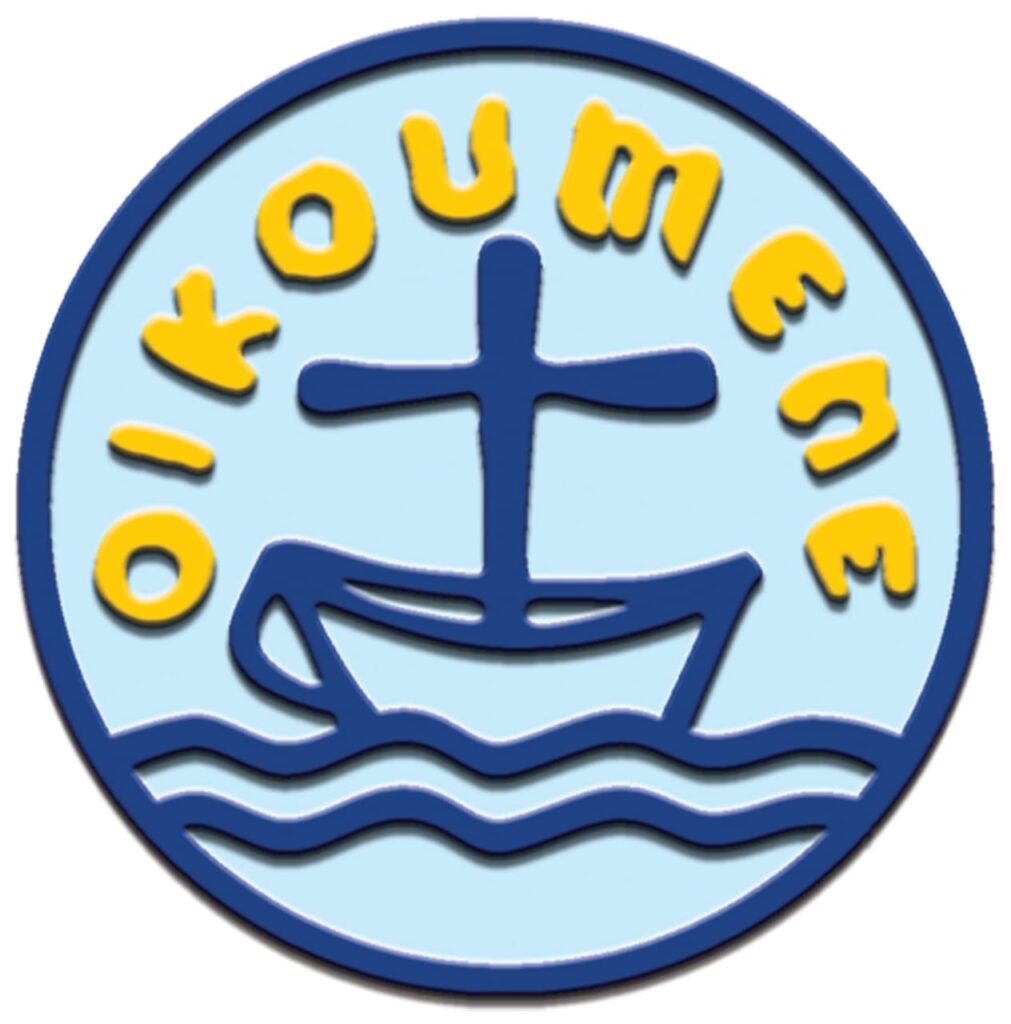
By the way, the word “ecumenical” (oikoumene in Greek) literally means “the whole inhabitable earth” — but it refers to the concept that the entire Christian Church of all its various denominations should work together to develop closer relationships and to promote Christian unity according to the biblical High Priestly Prayer of Jesus in John, chapter 17, verses 20-26.

So all of this stuff got me thinking about our ecumenical relations right here where we live as Mt. Olive Lutheran Church. I think of Via De Cristo (VDC), the spiritual retreat ministry our congregation participates in. While it’s mostly a retreat ministry involving Lutherans, rooted in the covenantal and sacramental theology of the Lutheran branch of Christianity, VDC also draws in people from many different denominations of our Lord’s Holy Church. I also think about the Lift Up Crescenta Valley ecumenical association we are a part of, as well as all the various ecumenical partnerships we support like the Bailey Human Care Center.

Like the ark of the Prophet Noah and the fishing boat of the Apostle Peter, all the denominations of the Christian Faith constitute the holy life raft for all believers and followers of Jesus Christ in a world deluged with the floodwaters of hopelessness and spiritual death. In fact, the Christian ecumenical movement is often symbolized by a boat, representing that all the people of all the denominations of the Church of Jesus Christ are in the same spiritual boat together.

So essentially, the various branches of the Christian Church are UNITED IN THE ESSENTIALS of our Christian Faith: 1) Jesus of Nazareth was and is more than a man, even much more than a prophet or priest or king, 2) Jesus is the only-begotten divine Son of God, 3) Jesus freely gave of himself in sacrificial love to be the once-and-for-all-time offering of atonement for our sins, 4) Jesus was crucified, was dead, was buried, then he rose from the grave and ascended into heaven, 5) Jesus is our Lord and Savior, 6) We proclaim the forgiveness of sins and everlasting life by the blood of Jesus, and 7) We do good works of lovingkindness and service in the name of Jesus. However, we also have DIVERSITY IN THE NON-ESSENTIALS of our Christian Life: that is, diversity of denominational practices related to sacraments, ordination, worship, piety, organizational structures, etc.

Therefore, as the various branches of the Christian Church have diversity in the non-essentials but unity in the essentials, we should also have CHARITY IN ALL THINGS. We can have a joyful and charitable spirit with one another as we agree to disagree regarding the non-essentials, because we share together in the all-surpassing seven Christian essentials I listed above.

“I have given them the glory that you gave me, that they may be one as we are one — I in them and you in me — so that they may be brought to complete unity. Then the world will know that you sent me and have loved them even as you have loved me.” (John 17:22-23)

Together in Christ,  Pastor Tim

SACRED WATER

As our Foothills community leaves behind the annual “May gray” and “June gloom” season of overcast mornings with occasional small weather systems coming through, we are now entering the bone-dry season of July through September/October. And although we can sometimes forget we live in an arid climate because of all the irrigated landscaping we enjoy, the simple truth is that we live where the desert meets the sea. Therefore, large-scale desalination (making fresh water from salt water), using a combination of low-carbon energy sources (wind, solar, natural gas, geothermal, nuclear and hydroelectric), along with increased large-scale water storage, are clear and present necessities for the sustained wellbeing of Southern California.

However, the arid climate of our part of the country and the 3+ months of dry season we’re entering are powerful reminders of the preciousness of water and its sacredness when connected to God’s Word for the baptismal covenant that God makes with us in Holy Baptism. For indeed, water is sacred both because it’s the most basic molecular element for physical life and because it’s the most basic sacramental element for incorporating us into God’s New Covenant established through Jesus Christ our Lord. In fact, the New Testament of the Holy Bible is clear about the sacramental and covenantal use of water according to God’s Word…

Do you not know that all of us who have been baptized into Christ Jesus were baptized into his death? Therefore we have been buried with him by baptism into death, so that, just as Christ was raised from the dead by the glory of the Father, so we too might walk in newness of life.

ROMANS 6:3-4

But when the goodness and loving kindness of God our Savior appeared, he saved us, not because of any works of righteousness that we had done, but according to his mercy, through the bathing water [mikvah] of rebirth and renewal by the Holy Spirit. This Spirit he poured out on us richly through Jesus Christ our Savior, so that, having been justified by his grace, we might become heirs according to the hope of eternal life. This saying is sure.

TITUS 3:4-8a

Go therefore and make disciples of all nations, baptizing them in the name of the Father and of the Son and of the Holy Spirit, and teaching them to obey everything that I have commanded you. And remember, I am with you always, to the end of the age.

MATTHEW 28:19-20

While some Christian traditions teach that Holy Baptism is exclusively for adult believers, not for young children or infants, Lutheran Christians understand the Bible as presenting the Sacrament of Baptism as inclusive of people at every stage of life. For Lutherans, we acknowledge that the early Church of Jesus Christ baptized both adults and entire households, including young children and infants. And we know this from the baptisms of whole households in the biblical Book of Acts as well as from the earliest of Christian Church writings from the First Century AD. Moreover, we Lutheran Christians also see the Holy Bible as presenting a covenantal understanding of Holy Baptism that’s similar to but exceeds the covenant of circumcision in the Old Testament.

Just as the Old Testament sign and seal of the Hebraic Covenant is physical circumcision — and afterward the circumcised Jewish male is expected to respond to and affirm this covenant of God in his adult life — so likewise Holy Baptism is the New Testament sign and seal of God’s New Covenant in Christ that we (both male and female) are to respond to and affirm for ourselves in our adulthood by the power of the Holy Spirit. Therefore, this covenantal theology of the Lutheran branch of the Christian Faith differs from Christian traditions which teach that Holy Baptism is merely symbolic.

Thanks be to God for our new birth into a living hope through God’s baptismal covenant with us! Baptized into Jesus Christ and his Church, the resurrection life of Jesus becomes our resurrection life. And as often as we affirm and abide in this baptismal grace through faith, we are “born again from above” (John 3:3-8) with a spiritual “circumcision of the heart” (Romans 2:29), over and over again, granting us continual renewal as beloved children of God throughout our lives.

Grace & Peace, Pastor Tim

WAR & PEACE

With the “wars and rumors of wars” (Matthew 24:6) of our 21st Century world, many Christians are wondering what God’s Word within the Bible says to us about such things. In particular, with Russia’s war against Ukraine in Eastern Europe and with “rumors of wars” brewing between China and Taiwan in the Western Pacific, I’ve been hearing questions about what the Bible has to say (especially the New Testament) regarding all of this. So, I thought I’d use my church article this month to do some biblical and theological reflections concerning war and peace from a Lutheran perspective.

Lutheran Christians have traditionally followed the Two Kingdoms Doctrine in our understanding of the relationship of Church and State. Rooted in the Holy Scriptures, this doctrine affirms that God established two primary realms of societal order: 1) the kingdom of God’s right hand, and 2) the kingdom of God’s left hand. Simply put, the so-called kingdom of God’s right hand is the Church and the kingdom of God’s left hand is the State.

Specifically, the kingdom of God’s left hand refers to the State’s God-given responsibility for law enforcement and military service for the sake of an orderly and peaceable society. As it says in Romans chapter 13, God has instituted the governing authorities “to bear the sword” (13:4) to exact justice upon the wrongdoer. As a result, Lutheran Christians have always honored the vocations of law enforcement and military service as God-ordained functions within society for the sake of good order.

Therefore, the kingdom of God’s left hand (the State) is the realm of law, justice and peacekeeping. While at the same time, the kingdom of God’s right hand (the Church) is the realm of forgiveness, mercy and peacemaking. And with both peacekeeping on one hand and peacemaking on the other, the whole structure of human society functions and thrives.

Now, as we apply this Two Kingdoms Doctrine to what’s going on in our globalized world today, we can acknowledge the important role of our armed forces in defending democracy, liberty and commerce. For example, if there was no United States Navy defending freedom of navigation then the seaways would be strangled by authoritarian autocrats and pirate warlords. Consequently, since the end of WWII our governing authorities have worked to cooperate with other democratic nations of the world to maintain the most peaceful and prosperous era in human history (broadly speaking, of course).

Functioning as the so-called kingdom of God’s left hand, our governing authorities have exercised the peacekeeping role of the State according to the longstanding foreign policy principle of peace through strength. As the Roman Christian, nobleman and scholar of the late 300’s AD, Flavius Vegetius Renatus, famously wrote, “If you want peace then prepare for war” (Si vis pacem para bellum). But of course, “The soldier above all others prays for peace” (General Douglas MacArthur).

On the other hand, the Church (the kingdom of God’s right hand) worships the Prince of Peace, so we always seek to faithfully exercise our role as peacemakers within our world according to the eternal principles of the gospel…  

“Blessed are the peacemakers, for they will be called children of God” (Matthew 5:9).

“Love your enemies and pray for those who persecute you, so that you may be children of your Father in heaven” (Matthew 5:44-45).

We recognize that the kingdom of God’s left hand (the State) in its peacekeeping role and the kingdom of God’s right hand (the Church) in its peacemaking role are both essential. And we also recognize that people of faith who have been called into law enforcement or military service are uniquely positioned by God to operate within both realms, and they offer us a great bridge of understanding. For example, I proudly served in our armed forces in the USAF as a young man. But as a Christian, I’m also called to be a builder of bridges for understanding and peace.

In the face of wars and rumors of wars in these times, we acknowledge the important role of our peacekeeping forces, but we Christians also continually seek peacemaking solutions and peaceful resolutions within our world — always looking toward the great and glorious Day of the Lord when “Death will be no more; mourning and crying and pain will be no more, for the first things have passed away” (Revelation 21:4).

And so, with one voice in universal chorus, we exclaim, “Amen! Come, Lord Jesus!” (Revelation 22:21).

Grace & Peace, Pastor Tim